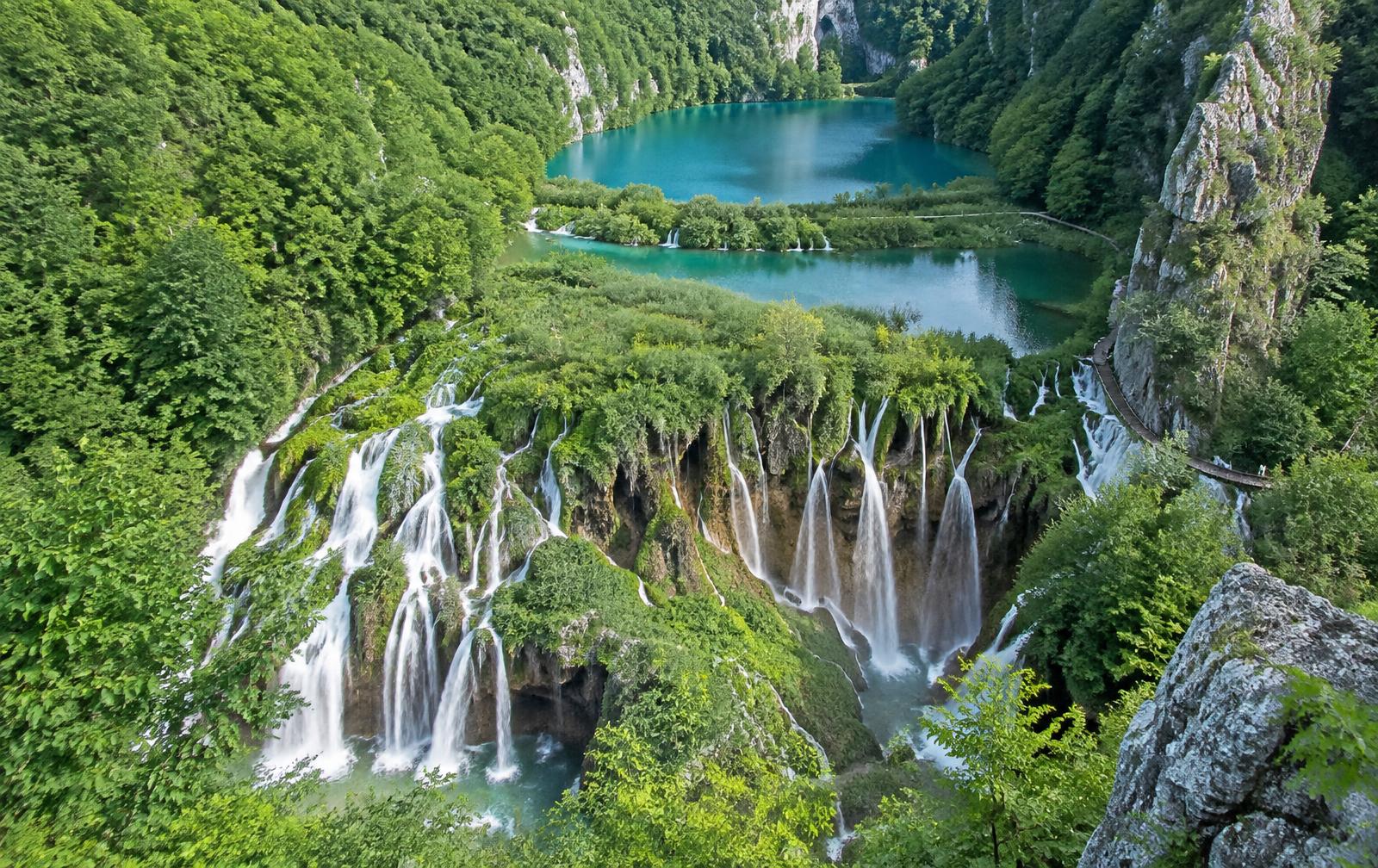
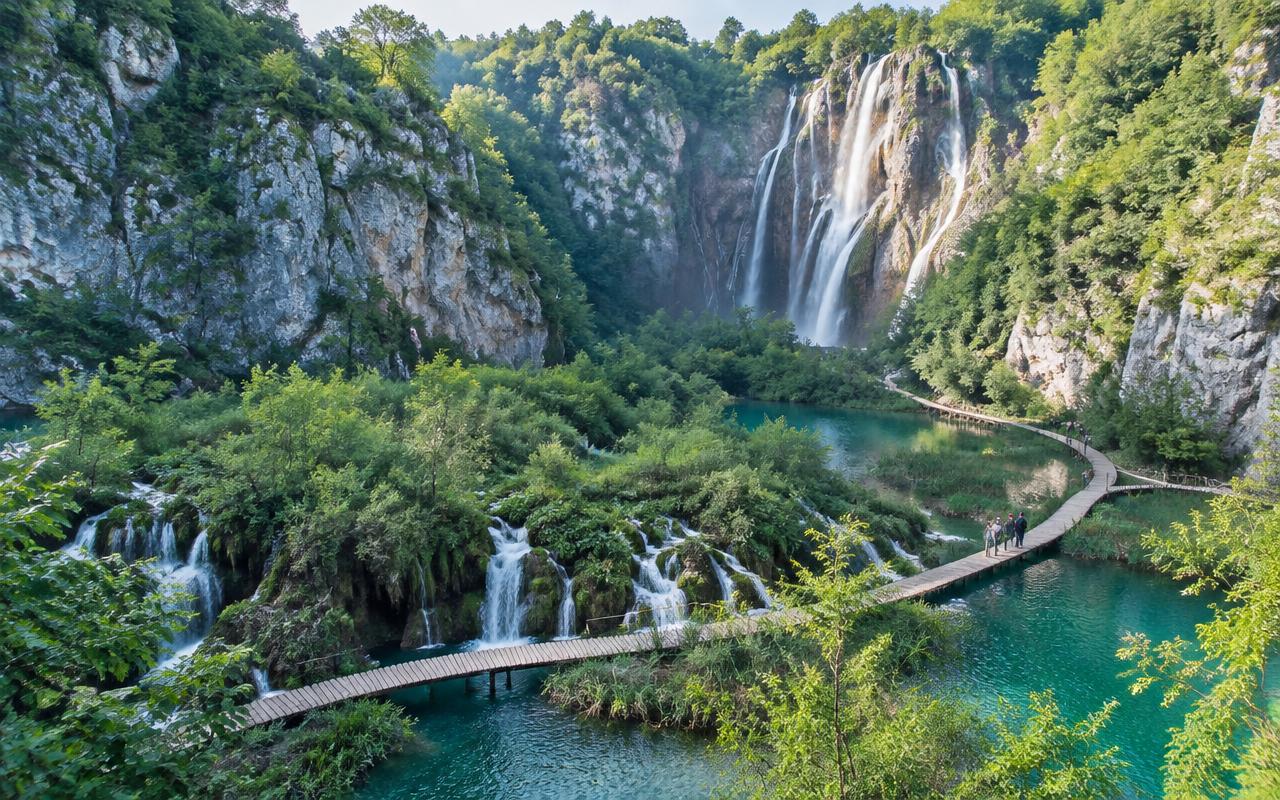
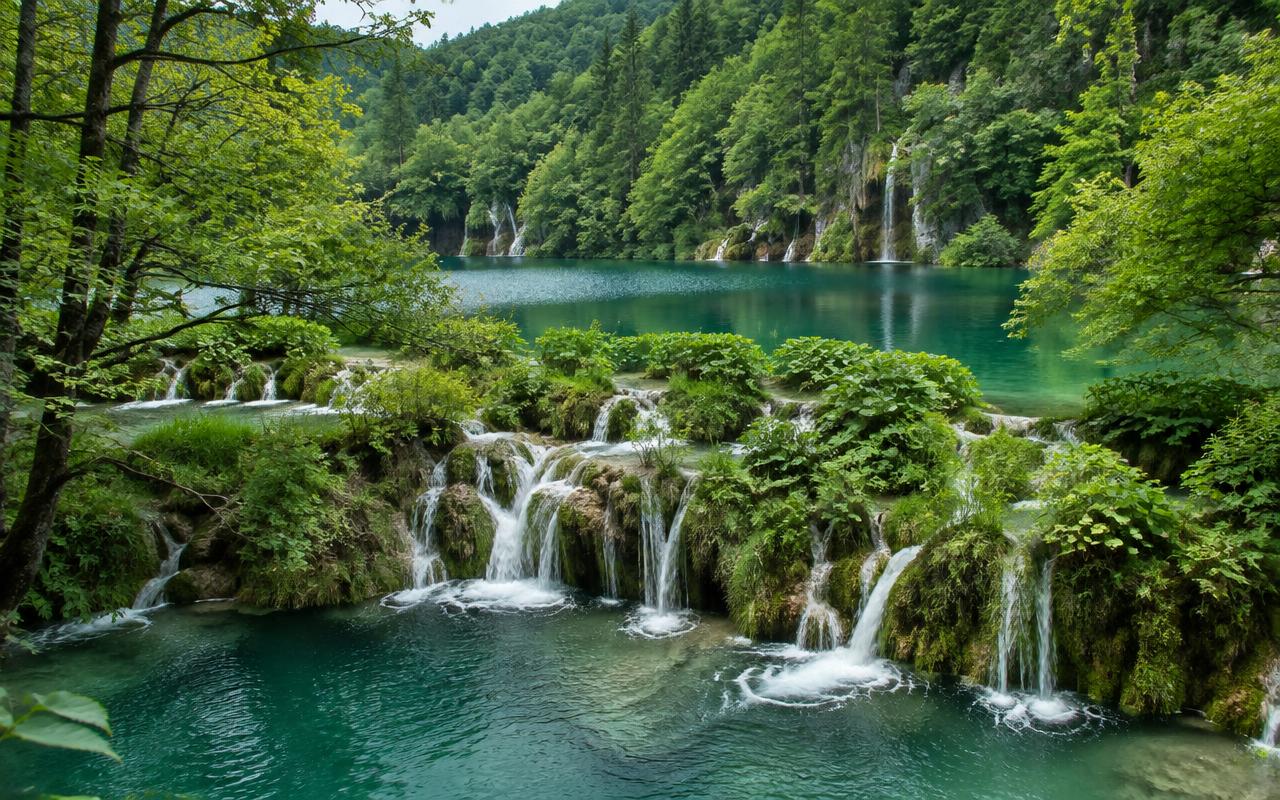
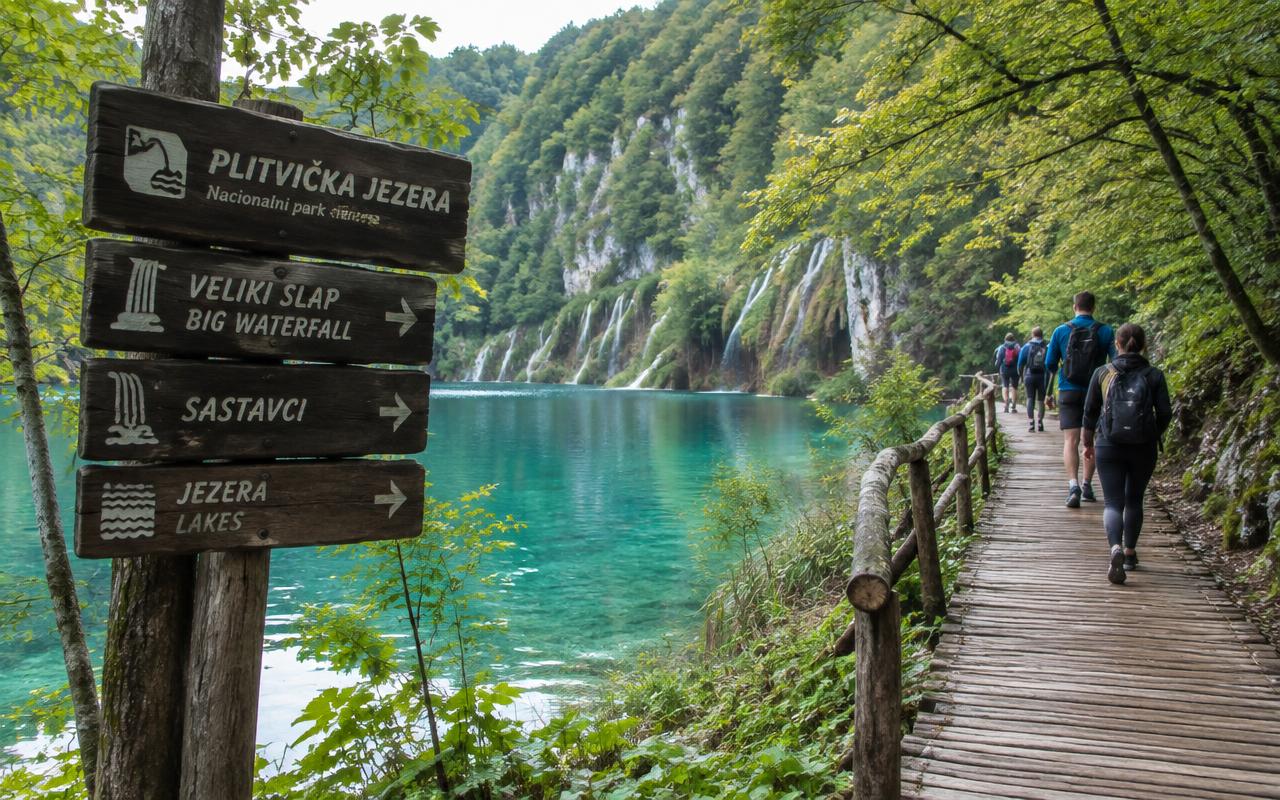
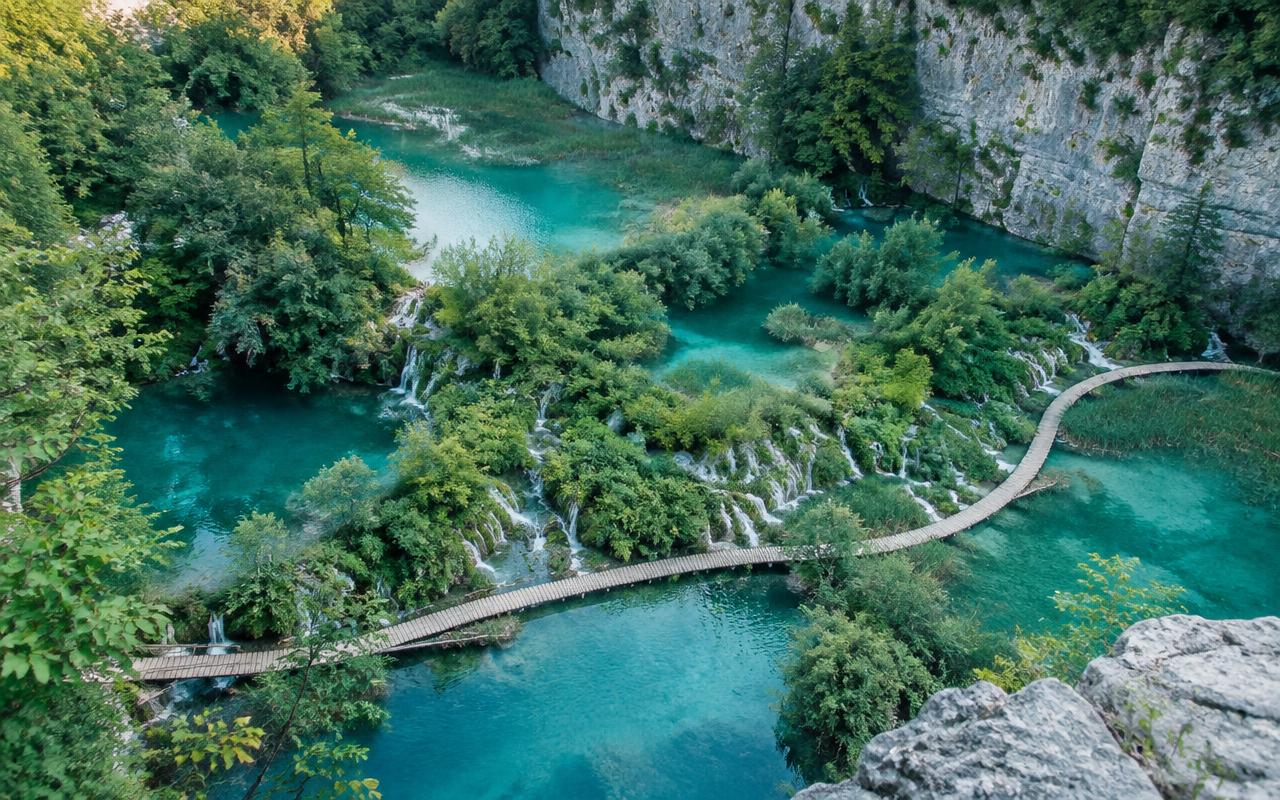
Plitvice is one of those places where the photos are real: 16 terraced lakes in shades of turquoise and green, connected by more than 90 waterfalls, with wooden boardwalks right over the water. It is also one of the most visited places in Croatia, so in July and August the boardwalks can feel like a queue. Keep in mind that you can't swim anywhere in the park, and that you will walk a lot, so wear good shoes.
History & How Long to Stay
The lakes formed over thousands of years as water running over limestone and dolomite left deposits of travertine, natural barriers that still grow about 1 cm a year, which is why the waterfalls keep changing shape. The area became Croatia's first national park in 1949, and in 1979 it was one of the first natural sites in the world added to UNESCO's World Heritage list. On Easter Sunday, 31 March 1991, a clash here between Croatian police and Serb rebel forces, known as the Plitvice Lakes incident, caused the first deaths of the Croatian War of Independence. The park was occupied until 1995 and was on UNESCO's list of World Heritage in Danger during those years. Today it protects almost 300 km² of forest, home to brown bears, wolves and lynx.
How long to stay: 1 full day. Stay 2 if you want to walk the upper and lower lakes calmly or be at the gate when it opens.