Spain
Overview
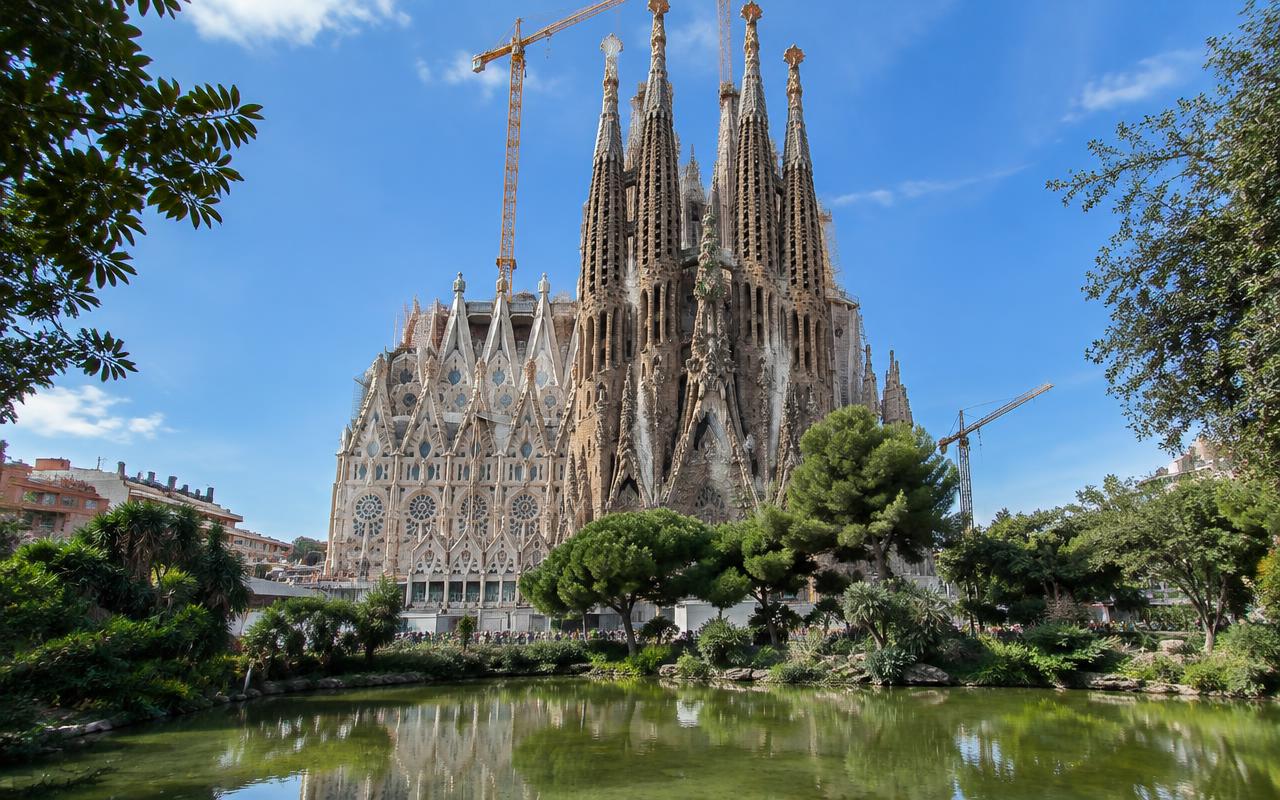
Barcelona is one of the few cities where the architecture alone justifies the trip. Gaudí's buildings are scattered across the Eixample and beyond, and each one looks like nothing else on earth — the Sagrada Família's forest of stone columns and stained glass, Park Güell's mosaic terraces overlooking the city, Casa Batlló's bone-like balconies on a street otherwise full of ordinary apartment blocks. I'd seen photos of all of them beforehand and was still caught off guard by how strange and organic they feel in person; nothing quite prepares you for standing under the Sagrada Família's ceiling watching the light turn the whole nave into stained-glass color.
But Barcelona isn't just Gaudí. The Gothic Quarter's medieval alleys open onto Roman ruins and quiet squares, the Boqueria market off La Rambla is genuinely worth fighting the crowds for if you go early and eat at the counter stalls rather than the tourist-facing stands, and the beachfront at Barceloneta gives the city something most European capitals lack — you can be in a 1st-century Roman street at 11am and swimming in the Mediterranean by 1pm. The tapas culture here runs deep too, and it's worth resisting the temptation to eat only near the main tourist strips; a short walk into El Born or Gràcia turns up far better food for less money.
What stuck with me most, though, was the rhythm of the city — long lunches, a genuine afternoon lull, and dinners that don't really start until 9 or 10pm. Barcelona rewards travelers who adjust to local time rather than fighting it. Climbing Montjuïc or Bunkers del Carmel for the skyline view at sunset, then easing into a late tapas dinner in Gràcia, is about as good an evening as European city travel gets.
Barcelona sits in Spain and rewards travelers who slow down: gaudí's fever-dream architecture, tapas bars, and the mediterranean at the end of every street. It's compact enough to explore on foot and layered enough that two days is a real minimum.
Barcelona sits on Spain's northeast Mediterranean coast, backed by the Collserola hills, with Montjuïc rising on its south side and a long stretch of beachfront running along its east. The easiest way in is by air to the nearest hub (see the Quick Facts panel), followed by a short transfer to the historic core. Once you're here, walking and rideshare cover almost everything on this list.
What I love here is the everyday rhythm — coffee in the morning, one landmark or museum before lunch, a slow afternoon in a neighborhood, and a proper dinner. Every attraction below earns its place; skip anything that doesn't fit your pace.
History & Stay
Quick Facts
Location
Barcelona sits on Spain's northeast Mediterranean coast, backed by the Collserola hills, with Montjuïc rising on its south side and a long stretch of beachfront running along its east.
Budget
Cards accepted everywhere including tapas bars. Currency is the Euro (EUR); carry a few coins for public restrooms and small tips.
Things to Do
Insider tip: Book tickets weeks ahead online and choose a morning slot for the best light through the stained glass.
Admission: €26–40
Insider tip: The monumental zone requires a timed ticket, but the rest of the park is free and less crowded.
Admission: €10 for monumental zone
Insider tip: Visit late afternoon when the sun hits the tiled facade directly.
Admission: €35+
Insider tip: Wander without a map — most of the best small squares aren't signposted.
Admission: Free
Insider tip: Go before 10am and eat at a counter stall rather than the tourist-facing stands near the entrance.
Admission: Food from €4
Insider tip: Skip La Rambla itself for tapas — prices are inflated and quality is lower.
Admission: €25–40 for a crawl
Insider tip: Time your visit for late afternoon and stay for sunset over the port.
Admission: €12 cable car
Insider tip: Arrive early to claim space in summer; the seafront chiringuitos get busy fast.
Admission: Free
Transit Tips
One of the easiest countries in the world to navigate; the trains and metros do most of the work.
The AVE network connects Madrid, Seville, Barcelona, and Valencia in a few hours. Book on Renfe or Trainline for the cheapest fares.
Madrid, Barcelona, Seville, and Valencia all run clean, cheap metro systems. Contactless card entry works on most turnstiles.
Both apps run in most Spanish cities and are cheaper than white and green street taxis.
